
Tongue-and-groove ceiling installation, indoors and out
Apperals Custom Woodwork installs tongue-and-groove wood ceilings in Boca Raton, Fort Lauderdale, Parkland and Deerfield Beach. We plank interior rooms and covered outdoor spaces such as loggias, lanais and porches, on flat, tray, vaulted and curved ceilings.
- Woods
- Pine, knotty pine, cypress, pecky cypress
- Ceiling shapes
- Flat, tray, vaulted, curved around domes and arches
- Finish
- Clear, stained, whitewashed or painted
- Outdoor spaces
- Loggias, lanais, covered porches, summer kitchens
- Often paired with
- Exposed beams, hip beams, crown or flat trim at the walls
- Where
- Jupiter to Miami, from our base in Deerfield Beach
Tongue-and-groove planking is the quietest of the wood ceilings. It reads as one continuous surface, warm without being busy, and it works on almost any ceiling shape. Each board has a tongue on one edge and a groove on the other. They lock together, so the ceiling stays flat and the nails hide inside the joint.
Interior tongue-and-groove ceilings
Indoors we plank primary suites, kitchens, dens and great rooms. Pine is the common choice, clear for a clean look or knotty for something more relaxed. Cypress costs more and brings stronger color. For a painted plank ceiling, pine or poplar keep the cost down.
Interior details that matter:
- Layout. We start from the room’s centerline, not one wall, so the last boards on each side come out equal.
- Fixtures. Cans, fans and speakers get cut cleanly through the boards, with the rings set flush.
- Edges. Where planks meet the walls we finish with crown or a flat trim band, sized to the room.
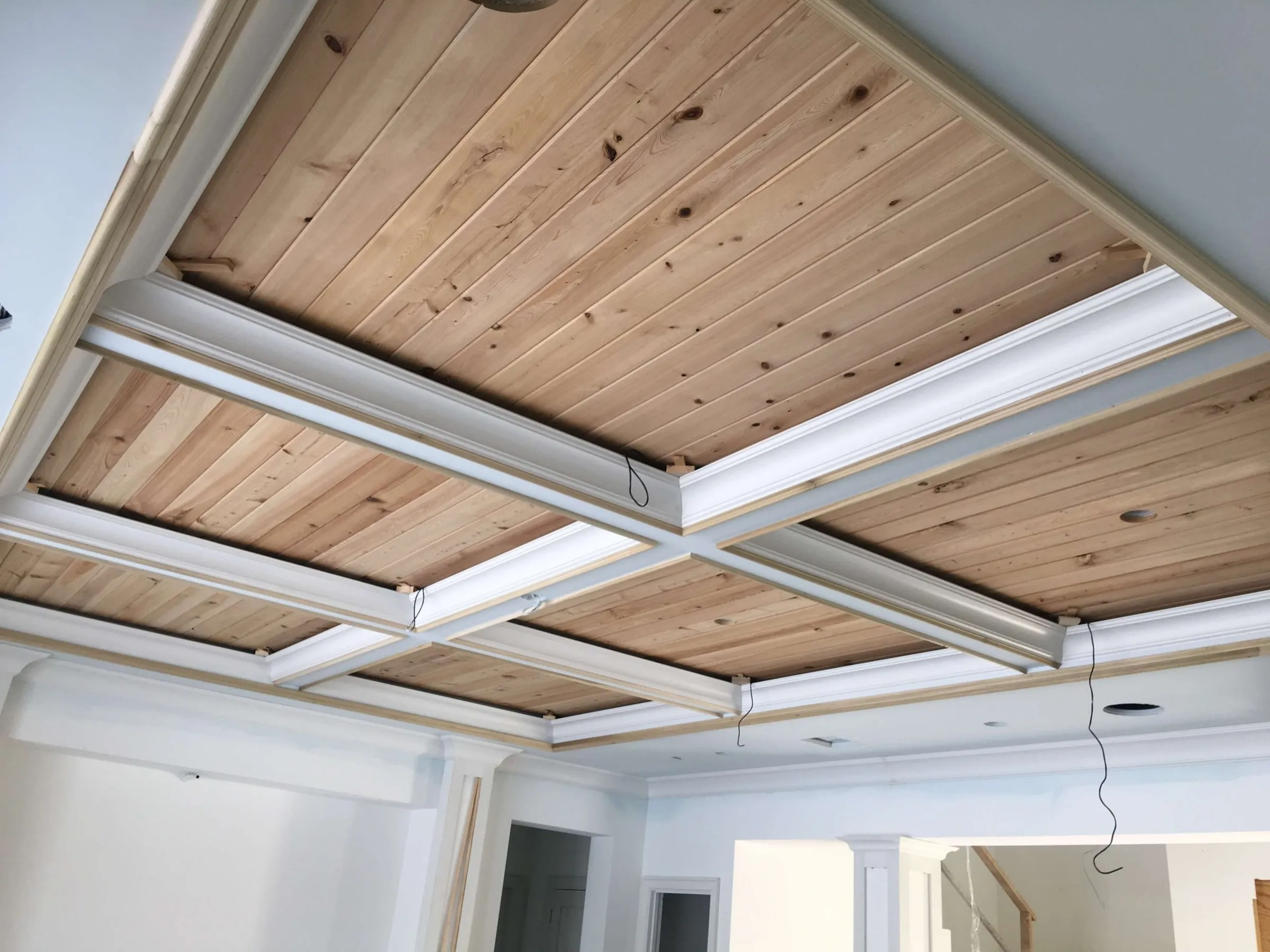
- Beams. Planking pairs well with exposed beams. The knotty pine ceiling in our photos is divided by white painted beams.
Outdoor ceilings for loggias and lanais
Covered outdoor ceilings are common on South Florida homes, and they fail in a predictable way. Humidity gets behind the boards, the backs absorb it while the faces stay sealed, and the boards cup. For loggia, lanai and porch ceilings we:
- Choose cypress or a well-sealed pine, depending on exposure.
- Acclimate the boards outdoors under cover.
- Seal all faces and cut ends before the boards go up.
- Fasten with stainless steel or coated nails.
- Leave a vent gap at the edges so air can move behind the ceiling.
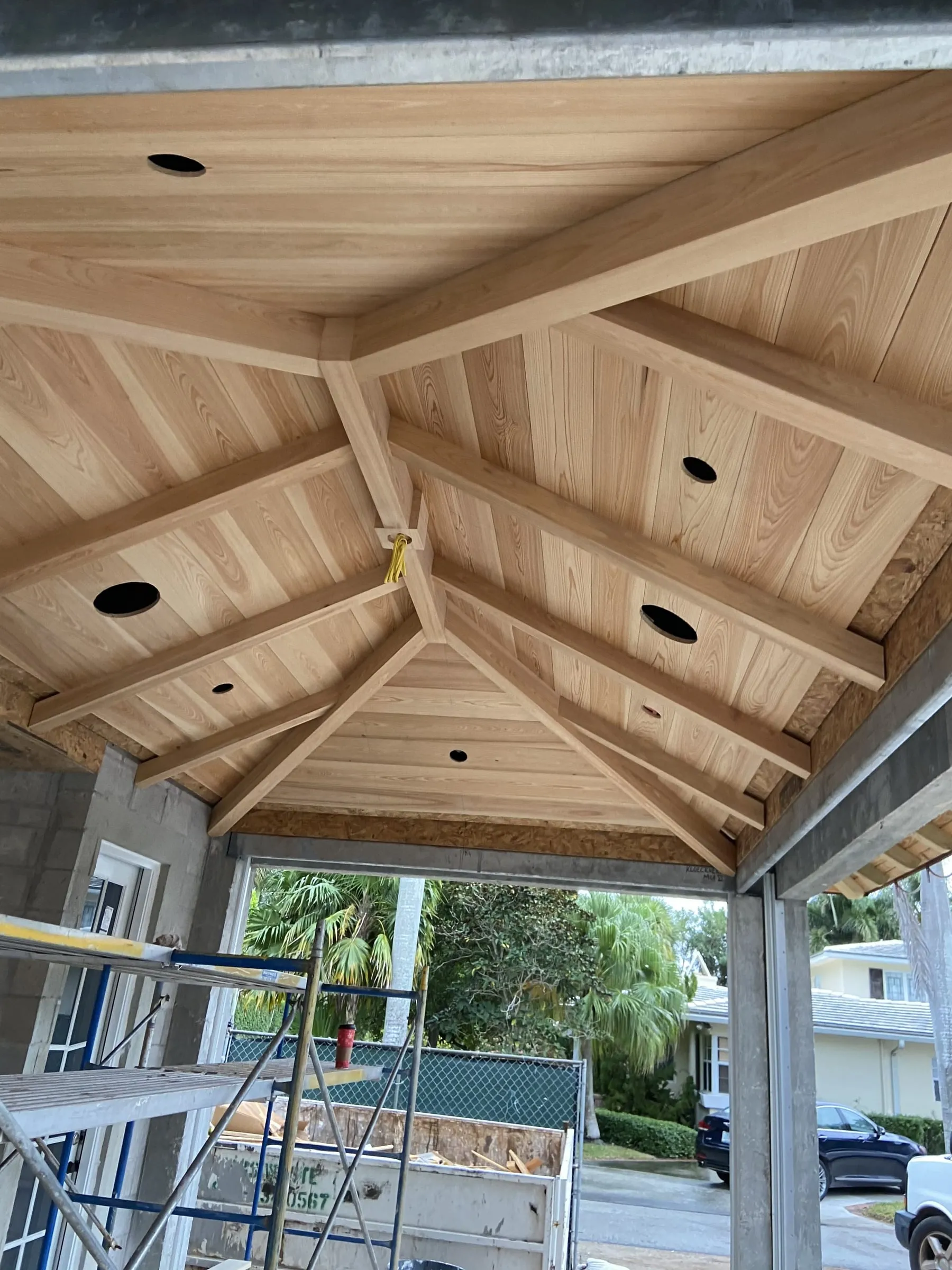
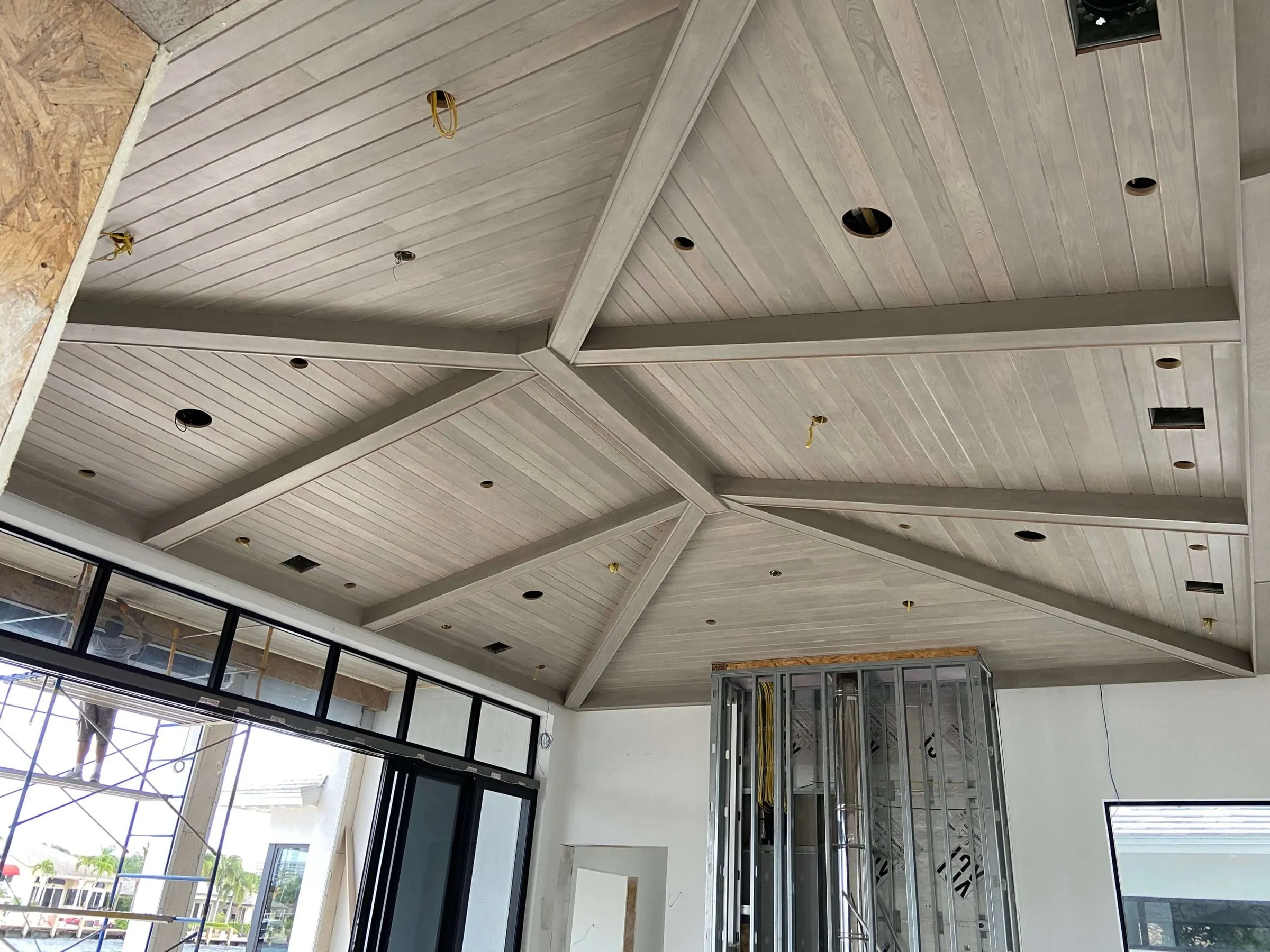
The vaulted pine loggia ceiling at the top of this page has planks run up the slopes, with hip beams covering the joints where the planes meet.
Vaulted, tray and curved ceilings
A flat ceiling is mostly straight runs. Shaped ceilings are where planking takes skill:
- Vaulted. Boards run parallel to the ridge. The ridge and any hips get a beam or a mitered cap.
- Tray. The field and each sloped side are planked separately, with a trim or beam at each break.
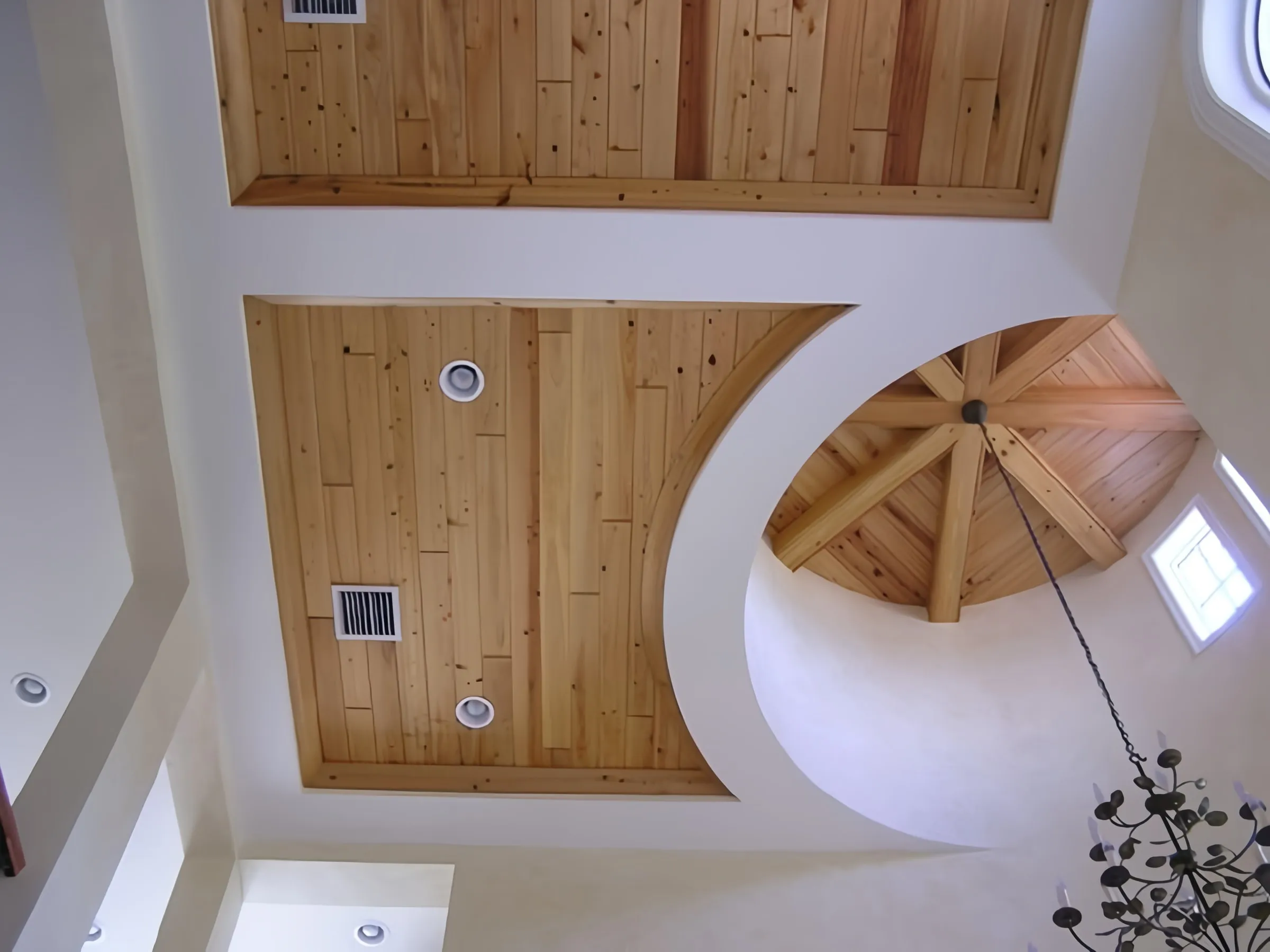
- Curved. Boards are cut to follow an arc or a dome edge. One of our ceilings has pine planking scribed in a curve around a beamed dome.
Interior vs outdoor at a glance
| Interior | Outdoor, covered | |
|---|---|---|
| Common woods | Pine, knotty pine, cypress | Cypress, sealed pine |
| Sealing | Face finish | All six sides |
| Fasteners | Standard finish nails | Stainless or coated |
| Main risk | Gaps from dry air conditioning | Cupping from humidity |
What moves the price
Area is the starting point. After that the cost follows the ceiling’s shape, the wood, the finish, how many fixtures must be cut around and whether scaffolding is needed. Outdoor ceilings add sealing time.
For the textured version of planking, see pecky cypress ceilings. To add structure overhead, see beamed ceilings.
Quote for tongue-and-groove ceilings
Leave your number and we'll call you back to talk through the project and set a time to measure. Builders and designers can text plans to the same number.
That phone number didn't look right. Enter a 10-digit number and send it again.
We couldn't send your request. Please call (754) 264-2296 and we'll take it by phone.
Thank you. We'll call you back from (754) 264-2296. Finish your text in Messages if you'd like to send photos of the space.
Recent work
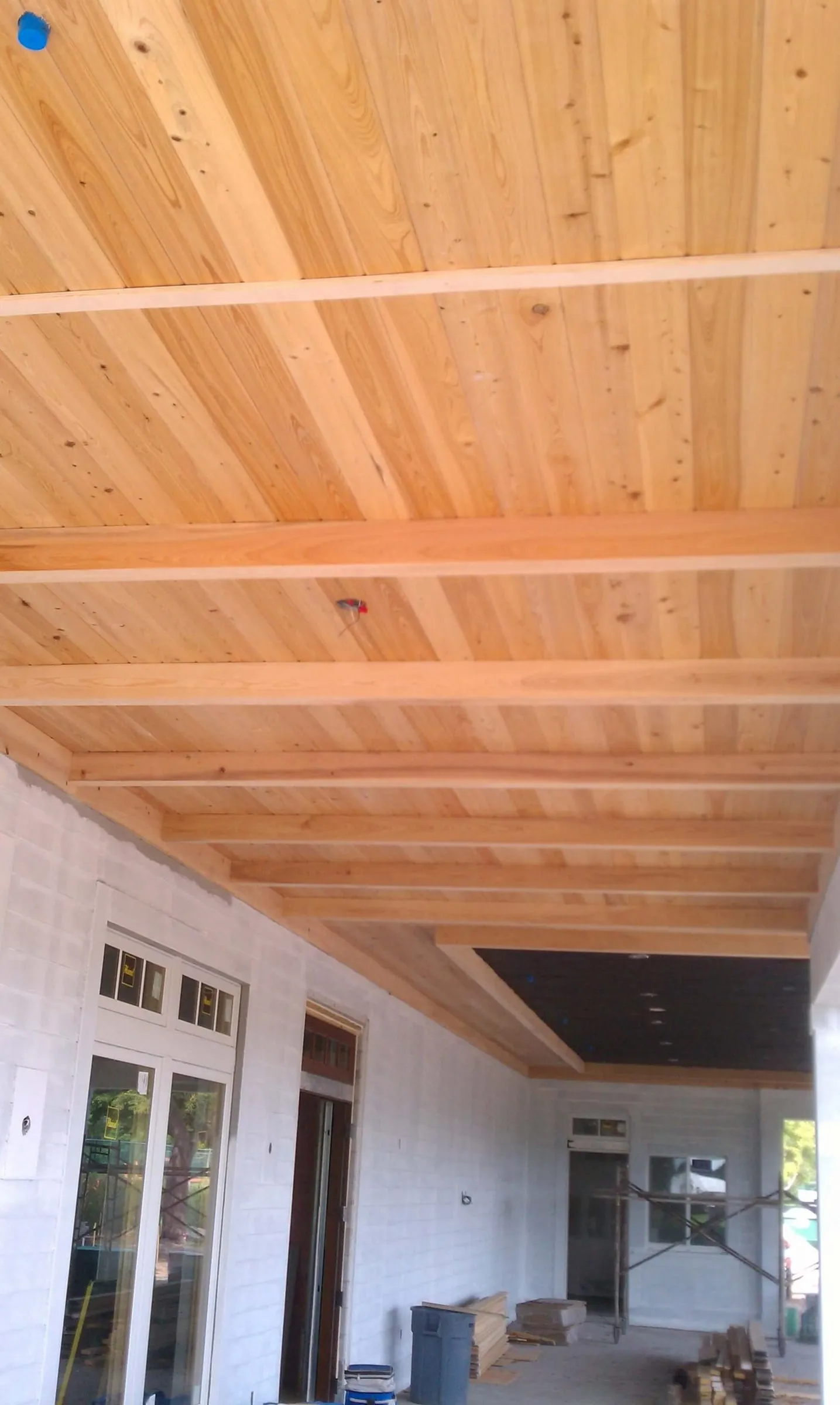
Tongue-and-groove ceilings from our jobs
Questions we hear
What is the best wood for an outdoor porch ceiling in Florida?
Cypress is the safest choice for a covered outdoor ceiling here. Its heartwood resists decay and it moves less in humidity than many softwoods. Most cypress sold now is second-growth with more sapwood, so it still needs a sealed finish outdoors. Pine works under a deep roof if it is sealed on every face and the space stays dry.
What is the difference between tongue and groove and shiplap on a ceiling?
Tongue-and-groove boards interlock, so they can be nailed through the tongue and the nails disappear. Shiplap boards overlap with a rabbet and are face-nailed. Tongue and groove makes a tighter, flatter ceiling with hidden fasteners.
Can tongue and groove be installed over a popcorn or drywall ceiling?
Usually yes. We fasten through the drywall into the joists or into furring strips, so the old ceiling stays as a backing. Popcorn texture may need scraping where strips go, and fixtures need extension rings.
Which direction should tongue-and-groove ceiling boards run?
Usually across the joists so every board gets fastened, and often along the long dimension of the room to make it read longer. On a vaulted ceiling boards normally run parallel to the ridge.
How much does a tongue-and-groove ceiling cost?
The cost depends on square footage, the wood, ceiling height and shape, and the finish. Curved and vaulted ceilings take more cutting than flat ones. We give a price once we have looked at the ceiling.
Tongue and groove by city
Often paired with